
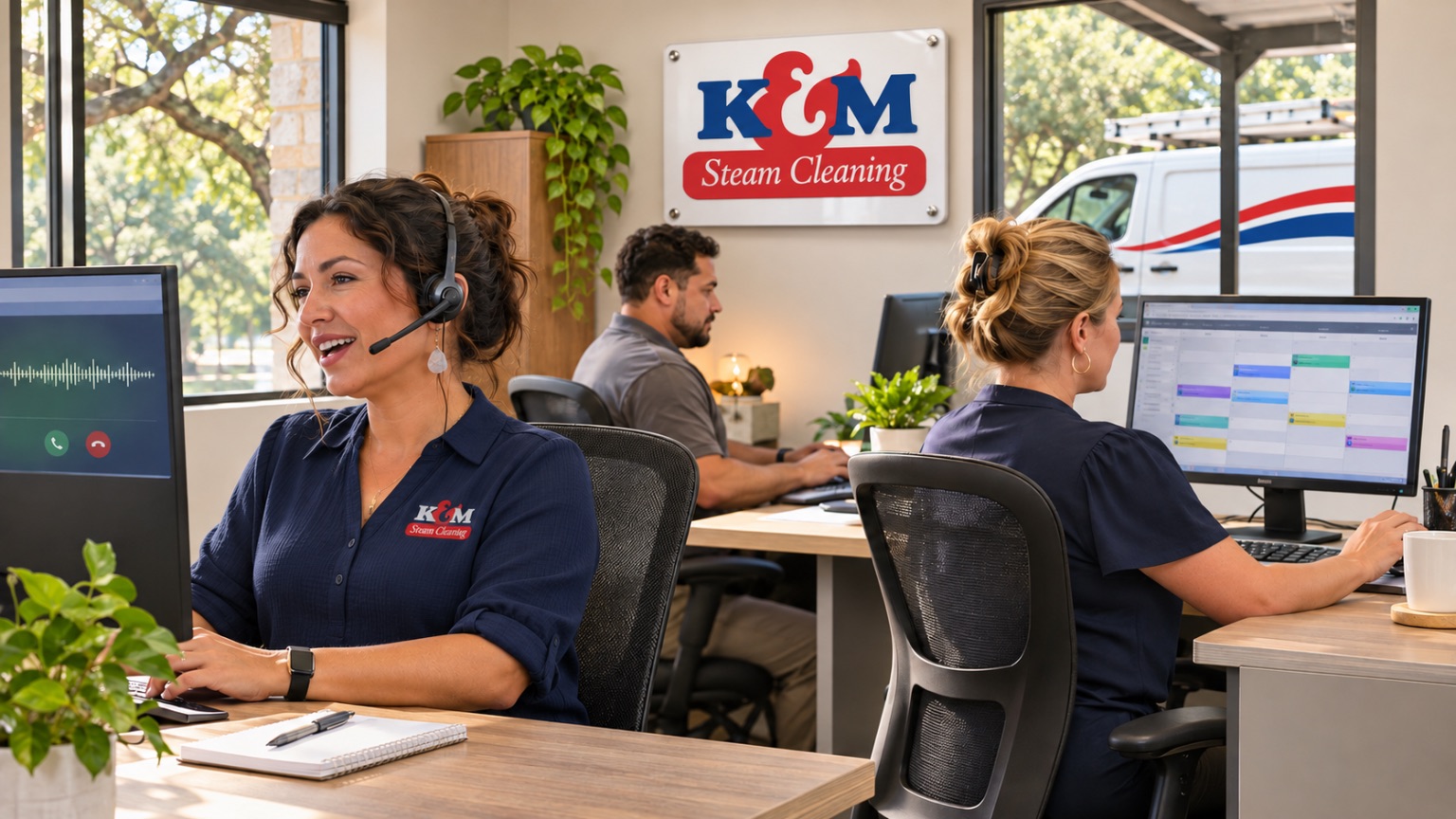
I knew we’d reached an interesting point with AI when we started getting calls from AI assistants. We’d just put an AI receptionist on the phones at K&M Steam Cleaning, and now somebody else’s AI was calling and talking to ours. I’d spent weeks working with our team to make it easier for people to book a cleaning. I hadn’t really thought about what it would be like when the caller was software, too.
I’m the vice president of marketing at K&M Steam Cleaning, a small, locally owned company in Austin. One of the things I love about the job is that I get to handle the full stack of marketing. I can work on Google Ads, write a page about rug cleaning, and sit down with our office team to figure out what happens after somebody clicks “Book Now.” This past month, that last part took me deep into our scheduling software and ended with AI answering our phones. It’s been one of the most productive work months of my life, and honestly, it’s been a lot of fun.
The first step was getting rid of a WordPress form
For a long time, when a customer wanted to book online, they filled out a WordPress form. They told us what they wanted cleaned and when they hoped we could come. Someone in our office then had to take that information, work out a time and manually enter the job into Housecall Pro, the software we use to manage appointments.
Housecall Pro had an online booking feature the whole time. We’d held off on using it because it didn’t quite fit the way we scheduled jobs. So I spent a lot of time learning what the software could do, and I worked with our office team to figure out where we could adjust the settings and where it made sense to change how we booked.
Which services could someone book on their own? What arrival windows could we offer? When did we need to ask for photos or have someone follow up? Our team handles those decisions every day, and their experience shaped what we set up.
Once customers could choose an available arrival window and put an appointment directly on our calendar, our AI receptionist could offer those same openings over the phone. That was the part I’d been looking forward to, and it depended on all the work we’d done before we ever turned it on.
Now AI is calling our AI
I’ve called our receptionist myself and listened to customer calls. On some of them, if I didn’t already know it was AI, I doubt I’d catch it. Then there are moments when you can imagine it stumbling over the spelling of a name and giving itself away immediately. If you’d like a person during business hours, you can just ask and go straight to our office team.
And now there’s the twist I didn’t see coming. An AI assistant can call on someone’s behalf, and the voice that answers on our end can be AI, too. I’m curious how ordinary that will feel a year from now. A month ago, we were still taking people’s scheduling preferences from a WordPress form and typing them into Housecall Pro.
What I’m most excited about today is what this changes for the people I work with. A customer who just needs a different arrival window can often handle it on the same call. That gives our team more time to look at photos of a sectional, ask the right questions about an area rug, or follow up on an estimate that needs more attention.
This is my favorite kind of work. I get to bring someone to our website, see where they get stuck, and work with the people who answer our phones to make the whole experience easier. This month I got to do all of that, and then I got to listen as customers actually used what we’d built. I’m already excited about what we’ll tackle next.


